
Industry News

Newsletter March '26

‘Made in Europe’ requirements, AI-driven energy demand, EPR compliance complexity, battery recycling digitalisation, and the growing importance of operational data in storage performance - March's core signals.
March 2026
Newsletter March ’26
‘Made in Europe’ requirements, AI-driven energy demand, EPR compliance complexity, battery recycling digitalisation, and the growing importance of operational data in storage performance - March's core signals.

1. Industry snapshot – DPP Data Mapping

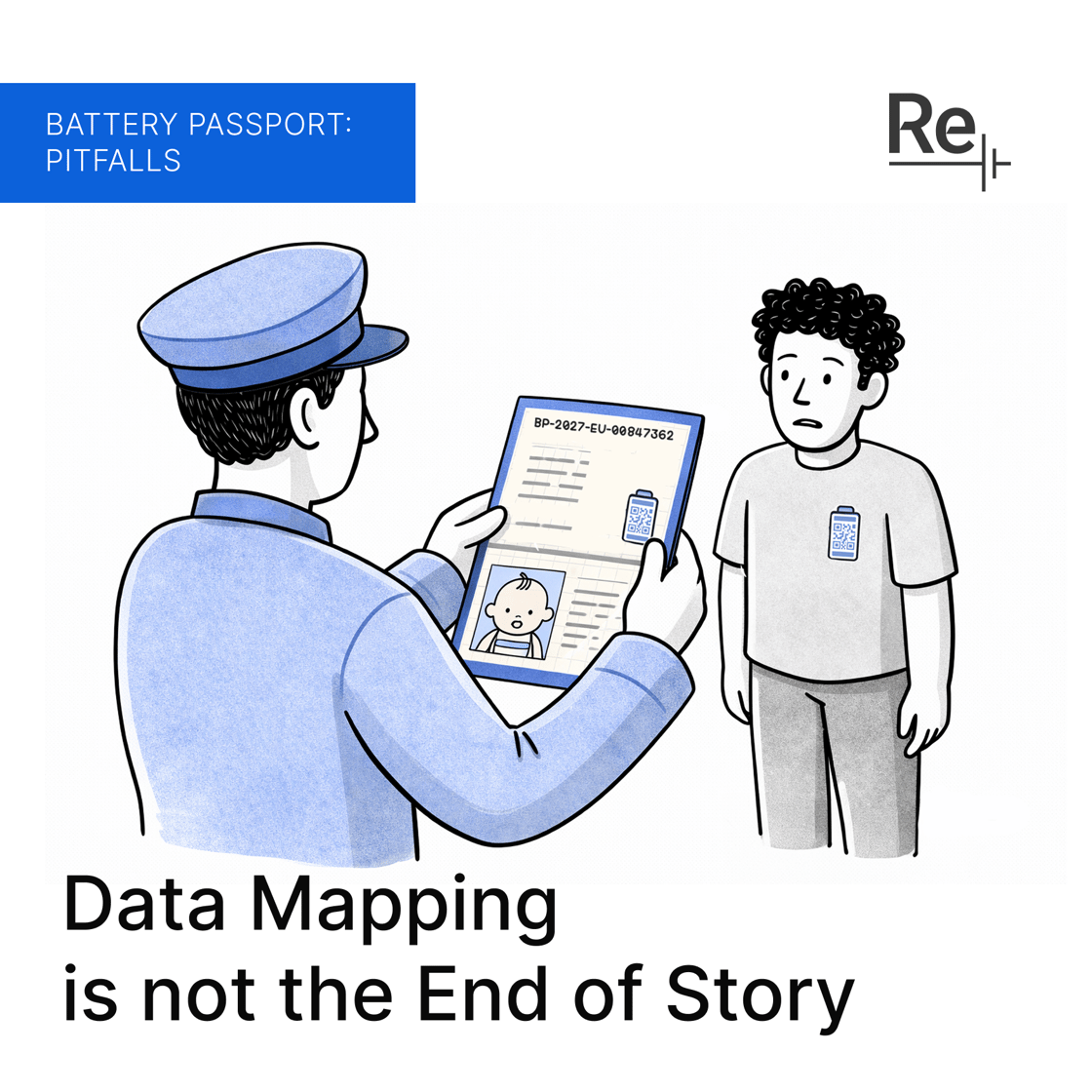
Imagine showing a customs officer your passport – but it was issued the day you were born. Technically valid. Completely useless. That’s what a Battery Passport looks like if you treat data mapping as the finish line.


Find out more on what lifecycle-ready Battery Passport infrastructure looks like.


2. Battery Regulation – Made in Europe


The EU’s proposed Industrial Accelerator Act introduces ‘Made in Europe’ requirements for energy storage and net-zero technologies from 2030. While boosting domestic manufacturing, reliance on China and cost impacts remain key concerns.


3. Market signal – AI Power Demand


AI-driven data centre demand is accelerating U.S. renewable growth, with record battery storage installations (58 GWh in 2025, +30% YoY). LFP batteries dominate today, but alternative chemistries are emerging.


4. Implementation behaviour – Renault Group


Renault has expanded AutoLOOP to include EV battery collection, creating a single platform for traceable recycling. This signals increased digitalisation of end-of-life management.


5. Data & ESG signal – Operational Alpha in Battery Storage 


As battery storage scales (94 GW added in 2025, +35% YoY), focus is shifting to performance optimisation and asset longevity. Poor data integration and limited lifecycle visibility are emerging as key ESG and financial risks.


6. Risk & enforcement – US EPR Regulations


State-level battery EPR laws in the U.S. from 2026 are increasing compliance complexity and operational risk. Manufacturers need end-of-life planning, reverse logistics capabilities, and domestic recycler partnerships for compliance.


7. Forward-looking signal – Manufacturing share of GDP


The EU aims to increase manufacturing’s share of GDP to 20% by 2035 through the Industrial Accelerator Act. This signals a long-term push towards localisation and industrial resilience.


Re – our neutral guide – delivers ReSource’s monthly snapshot of compliance and traceability signals observed across battery value chains.


Thank you for following our monthly signals.


Sources:

1. ReSource (2026); 2. Energy Storage News (2026); 3. Forbes (2026); 4.Renault Group (2026) 5. Forbes (2026); 6. Battery Tech Online (2026); 7. Financial Times (2026).

“ReSource is a very exciting development in global battery industry. We believe this initiative will help increase the transparency throughout the value chain.”
  • Industry News
  • Industry News
  • Industry News
  • Industry News
  • Industry News
Ensure compliance with battery regulations
Join the world’s top companies as they work to build transparent, compliant and resilient battery supply chains